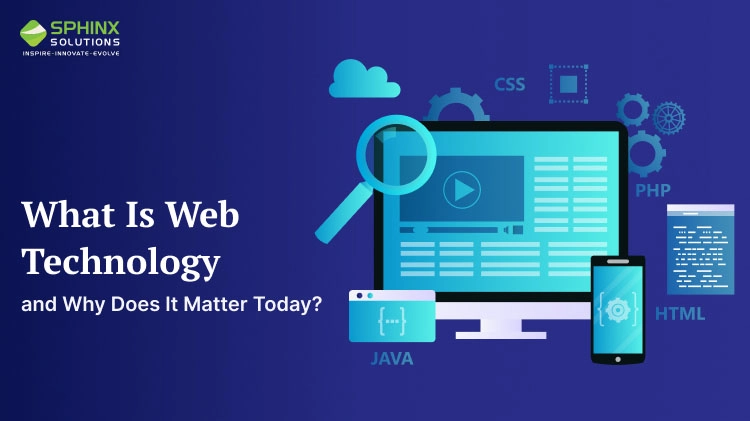
What is Web Technology? A Simple Guide
From ordering groceries to streaming your favorite show, web technology is the invisible force powering our digital lives. It’s the collection of tools, languages, and protocols that developers use to build and run websites and applications. Without it, the internet as we know it would simply not exist. This technology allows computers to communicate, share information, and create the interactive experiences we use every day.
This article will break down what web technology is all about. We’ll explore its core components, see how it has evolved, and look at what the future holds for this dynamic field.
The Building Blocks of the Web
Web technology is divided into two main areas: the frontend and the backend. Think of a website as a restaurant. The frontend is everything the customer sees and interacts with—the decor, the menu, the table settings. The backend is the kitchen, where all the work happens to prepare the meal. Both are essential for a good experience.
Frontend: The User’s View
Frontend technology, also known as client-side technology, is responsible for what you see and interact with in your browser. It determines the look, feel, and interactivity of a website.
- HTML (HyperText Markup Language): This is the skeleton of a web page. HTML provides the basic structure, organizing content into headings, paragraphs, images, and links.
- CSS (Cascading Style Sheets): If HTML is the skeleton, CSS is the clothing. It styles the HTML content, controlling colors, fonts, layouts, and the overall visual presentation.
- JavaScript (JS): This language brings the website to life. JavaScript adds interactivity, handling things like pop-up menus, form validations, and dynamic content updates without needing to reload the page.
Backend: The Engine Room
Backend technology, or server-side technology, works behind the scenes. It manages data, handles user requests, and ensures everything runs smoothly. When you log into an account or submit a form, the backend processes that information.
- Server-Side Languages: These languages run on the server to process logic and data. Popular choices include Python, PHP, Java, Ruby, and Node.js (which allows JavaScript to be used on the backend).
- Databases: Every complex web application needs a place to store data, such as user profiles, product information, or blog posts. Databases like MySQL, PostgreSQL, and MongoDB store, manage, and retrieve this data efficiently.
- Web Servers: Software like Apache and Nginx acts as a gatekeeper. It receives requests from your browser, finds the required resources, and sends them back to be displayed.
Web Protocols: The Rules of Communication
For the frontend and backend to communicate, they must follow a set of rules, or protocols. The most important one is HTTP (Hypertext Transfer Protocol). It defines how messages are formatted and transmitted between servers and browsers. You often see HTTPS, which is simply a secure, encrypted version of HTTP that protects your data.
The Evolution and Future of Web Tech
Web technology has come a long way.
- Web 1.0 (The Static Web): In the early days, websites were mostly “read-only.” They were simple, static pages of information with limited interactivity.
- Web 2.0 (The Social Web): The mid-2000s ushered in an era of user-generated content, social media, and collaboration. Technologies like JavaScript and backend frameworks enabled dynamic, interactive applications like Facebook, YouTube, and Google Docs.
- Web 3.0 (The Semantic & Decentralized Web): We are now entering a new phase focused on artificial intelligence, machine learning, and decentralization. This next evolution aims to create a smarter, more personalized, and transparent web, with technologies like blockchain playing a key role.
Looking ahead, trends like Progressive Web Apps (PWAs) that offer an app-like experience in a browser, the rise of serverless computing, and advancements in AI will continue to shape how we build and interact with the web.
Applications of Web Technology
Web technology is everywhere. Its applications are vast and continue to grow:
- E-Commerce: Online stores like Amazon and Shopify.
- Social Media: Platforms like Instagram, X (formerly Twitter), and LinkedIn.
- Entertainment: Streaming services such as Netflix and Spotify.
- Education: Online learning platforms and virtual classrooms.
- Financial Services: Online banking portals and investment apps.
- Healthcare: Telemedicine platforms and online patient portals.
Top Google Searches for “What is Web Technology”
- What are the types of web technology?
- What is web technology and its applications?
- Examples of web technologies.
- What is the difference between web technology and web development?
- Frontend vs. backend web technology.
- What are the latest web technologies?
Frequently Asked Questions (FAQ)
Q1: What is the difference between web technology and web development?
A1: Web technology refers to the tools, languages, and protocols used to create web content (e.g., HTML, CSS, Python, HTTP). Web development is the process of using these technologies to build, create, and maintain websites and web applications. In short, web technology is the “what,” and web development is the “how.”
Q2: Do I need to learn both frontend and backend technologies?
A2: Not necessarily. Many developers specialize in one area. A Frontend Developer focuses on the user-facing side of a website, while a Backend Developer works on the server, database, and application logic. A Full-Stack Developer is proficient in both frontend and backend technologies. It’s often best for beginners to start with one and expand their skills over time.
Q3: Is web technology difficult to learn?
A3: Like any skill, it takes time and practice. The basics of frontend technologies like HTML and CSS are relatively easy to pick up. Programming languages like JavaScript and Python have a steeper learning curve but are very rewarding. Thanks to countless online resources, tutorials, and communities, learning web technology is more accessible than ever.